
Buana’s First Glulam Villa in the Maldives
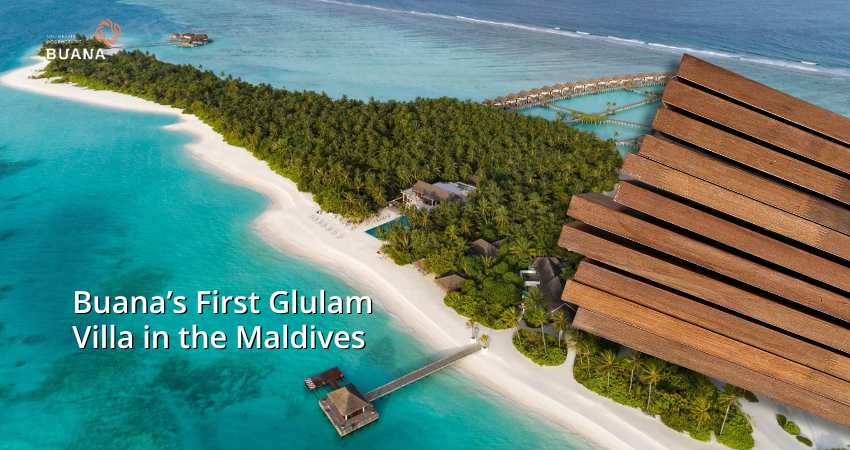
When 55 m³ of Indonesian keruing traveled 4,000 km across the Indian Ocean, it did not just become villas. It became a proof that Buana Keruing glulam serves as structural integrity and sustainable solution.
From Indonesian Mills to Maldives Shores
Every reputable Keruing manufacturer in Indonesia dreams of a project that tests both craftsmanship and values. For Buana Triarta, that moment arrived last year when Nautilus, a partner who truly believed in our Keruing glulam capability, invited us to build more than just a structure but a statement.
The destination was the Maldives. The materials were Indonesian hardwood, Keruing glulam, kapoor, and yellow balau from our own production line. And the mission was simple but ambitious: prove that tropical timber is the solution for bio-based construction material with exceptional strength.
A Story of 55 m³ and 4,000 km
We shipped approximately 55 cubic meters of Buana hardwood across nearly 4,000 kilometers from our Indonesian facility straight to island villas in the Maldives. The result is a collection of glulam villas where every truss and patio wears a rich, warm brown finish, unfinished kapoor screens, and yellow balau walls. But this is not just about color, the finish was carefully chosen to bring out the natural grain of every timber so the characters can speak for itself while still providing an extra layer of protection against humidity and salt spray.

Strength That Holds and Being Responsible
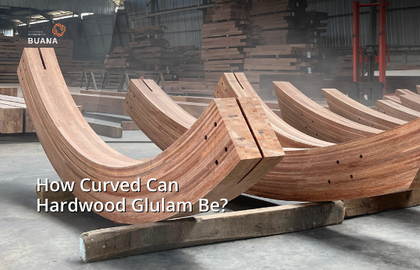
When you walk inside these Maldives villas, you will notice the timber does not hide. The Keruing glulam truss system and patio is left visible on purpose. Why? Because Buana Keruing glulam delivers high structural integrity without needing to be wrapped in concrete or steel. These demonstrate what architects rarely believe until they see it for themselves: a tropical hardwood glulam can span wide and carry heavy loads yet still feel warm to the eye.
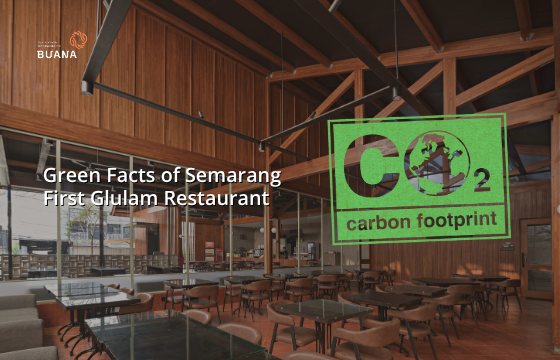
Beyond strength, Buana Keruing glulam serves a bigger purpose. Buana glulam and engineered timber products are made from 100% genuine Indonesian timber short-lengths and offcuts, helping extend log yield and minimize by-products through more efficient material use. In addition, based on an indicative calculation using an assumed total embodied carbon of 27,188.02 kg CO₂e and an estimated biogenic carbon storage of -85,786.25 kg CO₂e, the net carbon impact of this glulam villa project is -58,598.23 kg CO₂e*. This result demonstrates that the use of glulam as the primary construction material not only delivers strong structural performance but also stores more carbon than is emitted through its manufacturing and transportation processes, including shipment from Indonesia to the Maldives.

More Than Export, It Is a Testament
This is not just another shipment of Indonesian hardwood to Maldives. These villas transcend logistics. They prove that Indonesian hardwood like Keruing glulam can serve as both a structural material and a green impact that is simultaneously aesthetic, durable, and saving the earth.
For Buana, these first glulam villas in the Maldives are more than a milestone. They are an opening act. And yes, this project is already opening conversations for more developments of sustainable villa construction beyond the Maldives.
*No formal assessment has yet been undertaken. Any embodied carbon values presented are indicative estimates only and should not be interpreted as verified or final results. Actual embodied carbon may differ following detailed assessment, methodology review, and verification.