
Green Facts of Semarang First Glulam Project
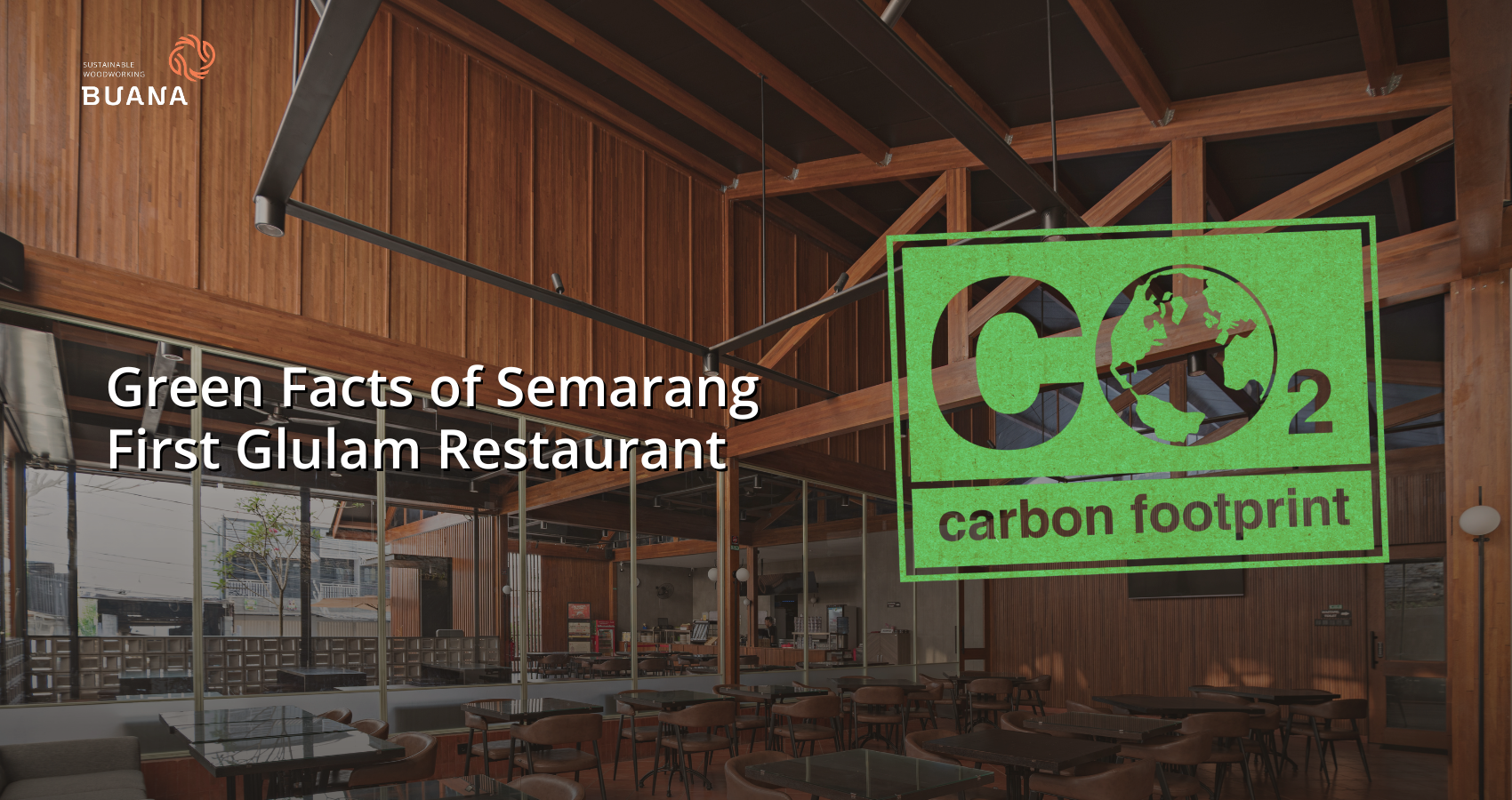
A restaurant in Central Java, Indonesia just proved that building with wood can actually store more carbon than it releases.
Semarang First Mass Timber Project
What does green building really mean? According to the World Green Building Council, a green building reduces or eliminates negative impacts on the climate and natural environment. But Buana Triarta, a trusted Keruing manufacturer in Indonesia, wanted to go further than just reducing harm. We wanted to prove that Keruing glulam could actively benefit the planet.
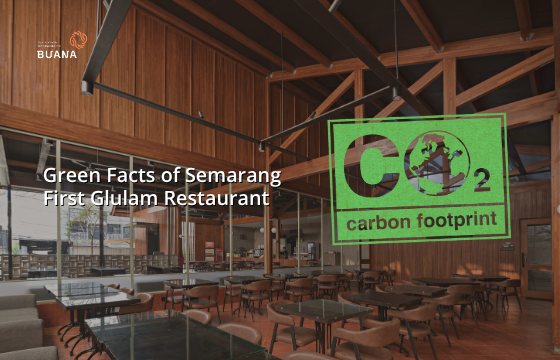
That is why our first mass timber project, OTI Signature Kedungmundu in Semarang, became more than a restaurant. It became a case study. A 21cbm glulam for construction project designed to bring engineered timber closer to people while creating a warm, natural spatial experience. But the real story is not just about beauty, it is about carbon.
The Pivotal Carbon Assessment
Buana partnered with Nautilus Innovation to conduct a carbon impact assessment following the cradle-to-gate boundary. According to the Carbon Impact Summary reported by Nautilus in February 2026, the 21 cbm of Keruing glulam installed in OTI Signature has a total embodied carbon of 12,455 kg CO2e. That number includes the carbon emitted during the raw material transportation, the manufacturing process (calculating factors like electricity, fuel, and adhesive use), and final delivery to the construction site in Semarang.
Then came the second calculation. The biogenic carbon stored in the wood, which is the carbon absorbed by the trees through photosynthesis while they were still growing, was measured at 32,850 kg CO2e following the EN 15804 methodology. When you subtract the emitted carbon of 12,455 kg CO2e from the stored carbon of 32,850 kg CO2e, the result is a net carbon impact of negative 20,425 kg CO2e.

What does carbon negative actually mean? A carbon-negative material removes more carbon dioxide (CO2) from the atmosphere than it releases. In plain language, the Keruing glulam used in OTI Signature acts as a carbon bank. Even after accounting for every truck, every machine, and every kilowatt of electricity used to manufacture and transport the timber, the building still stores 20,425 kg of CO2e that would otherwise be in the air. This is not common in construction because concrete and steel are carbon positive from the moment they are made.
Why This Matters for Sustainable Construction
As Indonesia's built environment sector searches for lower-carbon pathways, Keruing glulam and other engineered timber products represent a proven, immediately available solution. They deliver structural performance, aesthetic quality, and measurable climate benefits all at once.
This carbon impact assessment provides Keruing glulam by Buana Triarta with the quantified evidence needed to turn an aspirational goal into a sustainable reality backed by transparent, defensible data. And as the first commercial glulam structure in Semarang, OTI Signature located in Kedungmundu represents a new direction for sustainable construction in Indonesia.