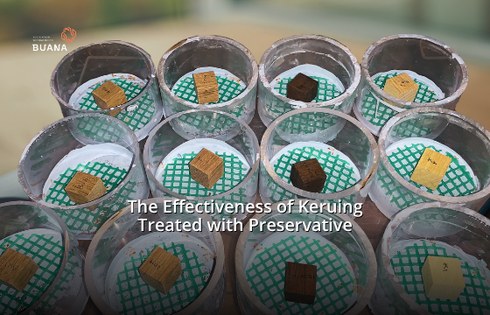

The Effectiveness of Keruing Treated with Preservatives
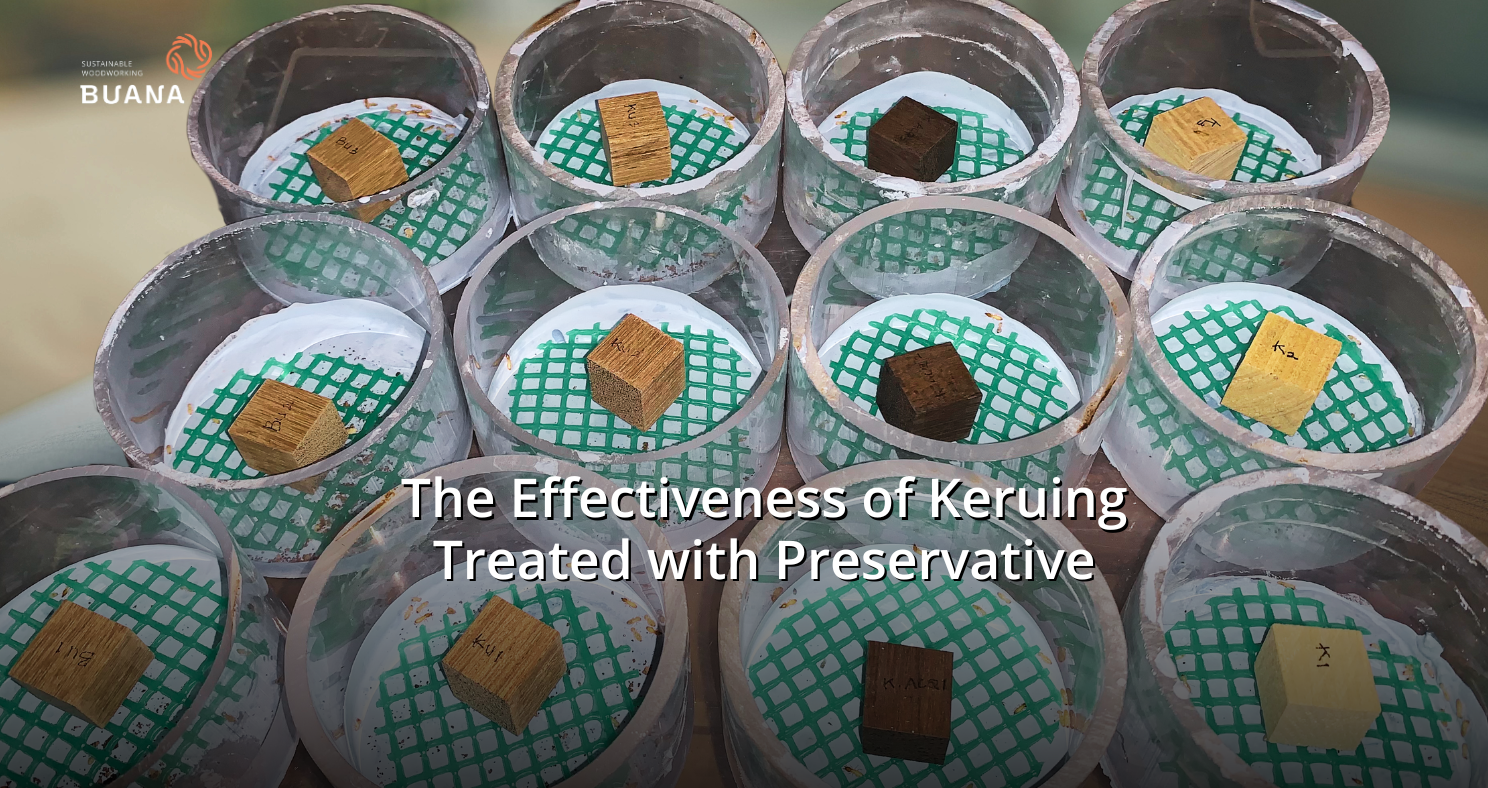
What happens when you take Keruing hardwood, treat it with preservative, and test it against Southeast Asia's most aggressive termites? You get a timber that doesn't just resist decay but earns a Class 1 durability rating.
Buana Keruing: Treated and Tested
As a Keruing specialized manufacture in Indonesia, we do not guess but we verify. That is why we commissioned an external laboratory to test our treated Keruing against one of the most destructive subterranean termite species in Southeast Asia: Coptotermes curvignathus.
The goal was simple. We wanted to understand exactly how preservatives perform when applied to Keruing and to answer the most important question asked by clients, what durability class does treated Keruing actually belong to?

Trusted Standard and Two Data Points
The test followed the Japanese Industrial Standard (JIS) 1571:2004 for over three weeks. Researchers compared four different samples. These included pinewood as a control unit, untreated Keruing, untreated Bangkirai (Yellow Balau), and preservative-treated Keruing. The termites were not given an easy way out. They had to feed or die trying. Two measurements decided the outcome: termite mortality rate and timber weight loss.

In mortality data, treated Keruing showed the highest termite death rate by a significant margin. This proves that Keruing’s preservative does not just repel insects but it is toxic to them, and that toxicity works. Meanwhile, untreated Bangkirai showed the second lowest mortality rate. This suggests Bangkirai acts more like a repellent so termites simply avoided eating it, but they did not die from exposure.
The weight loss data tells an even more compelling story. Treated Keruing had the lowest timber weight loss among all samples. Even Bangkirai, known for its natural durability, could not beat the protection offered by the preservative treatment. While Bangkirai works as an antifeedant, meaning it deters insects from feeding, treated Keruing actively kills over 93% of termites due to its toxic effect.
According to the Indonesian Wood Durability Standard, timber with weight loss below 3.5% earns Class 1 durability and treated Keruing achieved a weight loss percentage of just 3.22% percent. That puts treated Keruing firmly in the highest durability category.
What This Means for Project Owners
Numbers are useful, but here is what they mean for anyone specifying timber for outdoor structures. In addition to independent external testing, Buana conducted in-house testing that demonstrated a 75% preservative penetration rate in Keruing and an active retention rate of 20 kg/m³. These results are comparable to the requirements of the Australian timber preservation standard AS/NZS 1604:2021, specifically Hazard Class H5. This classification means that the preservative penetrates well into Keruing, and with its high penetration and retention rates, Keruing is suitable for applications exposed to extreme wetting and leaching or conditions that require a higher level of protection.
As a specialist in Keruing hardwood, Buana leverages verified preservative-treated Keruing to produce high-performance engineered timber products. This includes standardized and verified Keruing posts, beams, and columns for structural applications that are both durable and safe for outdoor use, including exposure to freshwater environments.